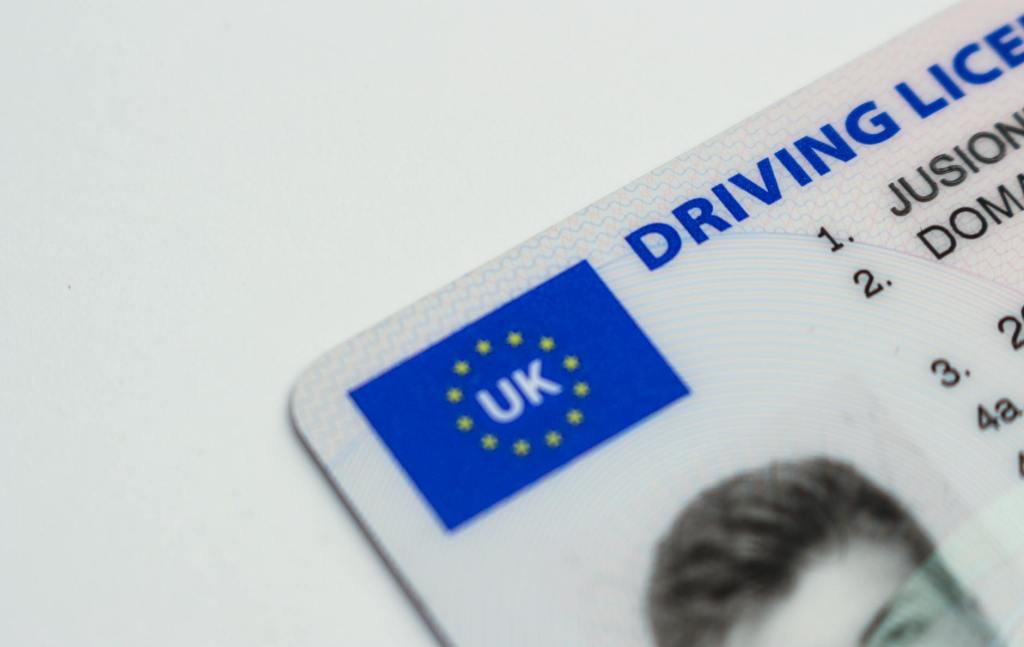
Britain stands at a crossroads. As nations across the globe embrace digital identity systems that enhance public services, secure borders, and boost economic efficiency, the UK risks falling behind. The debate is no longer about whether digital identity will be adopted, but when and how.
In a time of political uncertainty and economic strain, transformational change is not a luxury—it’s a necessity. The tools exist. The technology is proven. What’s missing is the collective will to act.
A Nation Strained by Outdated Systems
Public frustration is growing: taxes are high, public spending is soaring, and yet service outcomes—from healthcare to housing—are deteriorating. The NHS exemplifies this contradiction: record funding and staffing levels are failing to translate into timely care or efficient delivery.
Across Western democracies, voters are rejecting incremental fixes. The rise of populism and political upheaval reflects a hunger for bold solutions that break with the status quo. A well-designed digital identity system represents exactly that kind of systemic innovation.
The Foundations Are Already in Place
Far from starting from scratch, Britain already maintains a patchwork of digital identifiers: NHS numbers, National Insurance numbers, DVLA records, tax references, and immigration databases. Yet these systems operate in silos, duplicating effort and obscuring visibility.
Platforms like GOV.UK One Login and the NHS App demonstrate public readiness for a more integrated and user-friendly model. Connecting these fragments into a unified digital ID is a logical next step, not a technological leap.
Unlocking Billions Through Transparency
The shadow economy drains over £36 billion annually from the UK exchequer. A modern digital identity system would help reduce fraud, enforce compliance, and simplify verification.
Employers could instantly confirm right-to-work status. Landlords could validate tenant eligibility with a quick scan. Benefit fraud, tax evasion, and underground employment could all be dramatically reduced, while legitimate users gain faster, fairer access to services.
Beyond enforcement, better data means better policy. With consistent and reliable identifiers, governments can plan and invest more effectively, tailoring interventions to real-world needs and outcomes.
Making Immigration Work
Estimates suggest there are over 600,000 people in the UK without legal residency. Current systems—largely paper-based—are simply unfit for purpose. Digital identity could enable rapid verification of eligibility for services, simplifying life for legal residents and curbing abuse of the system.
This isn’t about hostility—it’s about fairness. Legal migrants deserve protection from exploitation. Public services must be safeguarded for those who have the right to use them. Clear, convenient digital verification benefits everyone.
Privacy by Design
Privacy concerns are valid, but they are often based on outdated comparisons to the defunct ID card schemes of the past. Today’s digital identity platforms are fundamentally different: decentralised, encrypted, user-controlled, and GDPR-compliant.
Ironically, most of us already share far more data with commercial platforms than any public digital ID would ever require. If people are comfortable using smartphones for banking, shopping, and social media, it is illogical to reject a secure, accountable public alternative designed to protect their rights.
A Global Shift We Can’t Afford to Miss
From Estonia to India, the UAE to Singapore, digital identity is transforming how states serve their citizens. The World Bank, the UN, and global policy forums now see it as foundational for governance in the 21st century.
Britain has enormous advantages: world-class universities, a leading AI sector, a strong rule of law, and a mature digital infrastructure. Yet without decisive political action, those advantages risk being squandered. Momentum is building elsewhere, and catching up will be far more complicated than leading from the front.
A Healthcare System Transformed
A unified digital identity would revolutionise healthcare access. Patients could securely store their full medical history on their phones, making it shareable—if they choose—across the NHS.
This would allow faster diagnoses, eliminate duplication, and enable predictive care. Linking this to genomic data and drug discovery tools could accelerate progress toward personalised, preventive medicine, saving lives and reducing long-term costs.
A Political and Civic Opportunity
A growing number of public and private institutions are calling for change. The Labour Party has signalled openness to digital reform, and civil society is increasingly engaged in shaping the conversation around digital rights and governance.
This is a chance for progressive transformation—not through deregulation or austerity, but through smarter, fairer government made possible by technology.
Convenient, Secure, Seamless Services
Imagine renewing your passport, booking a GP appointment, applying for benefits, or filing taxes through a single secure app. No long forms, no lost documents, no need to remember a dozen logins. Everything you need, in one encrypted digital wallet.
Such systems are already being trialled around the world. The UK must decide whether to lead in this space or become a follower.
The Moment to Act
This isn’t a theoretical debate. The consequences of inaction are real: continued fraud, missed revenue, creaking public services, and lost global competitiveness.
The infrastructure is ready. The public appetite exists. The economic case is clear. Digital identity is not a silver bullet, but it is a critical foundation for modern government.
It’s time for the UK to stop debating and start delivering. Contact your MP. Join the public conversation. Support efforts that balance privacy with progress. The future won’t wait for us to decide—it’s already arriving.
Let’s choose to shape it.
—
References
- HM Revenue and Customs. (2024). “Tax Administration Framework Review.” HMRC Publications.
- Home Office. (2024). “eVisa and Digital Immigration Status: Implementation Guide.” Home Office Immigration Policy.
- Government Digital Service. (2024). “GOV.UK One Login: Annual Report 2023-24.” Cabinet Office.
- NHS Digital. (2024). “NHS App Usage Statistics and User Satisfaction Survey.” Department of Health and Social Care.
- HM Revenue and Customs. (2024). “Measuring Tax Gaps 2024 Edition: Tax Gap Estimates for 2022-23.” HMRC Analysis.
- Low Pay Commission. (2024). “Non-compliance and Enforcement in Low-paid Work.” Department for Business and Trade.
- House of Commons Home Affairs Committee. (2024). “Channel crossings, migration and asylum-seeking routes through safe countries.” Parliamentary Papers.
- Migration Observatory at the University of Oxford. (2024). “Comparing Immigration Control Systems: UK and EU Approaches.” COMPAS Research.
- House of Commons Public Administration Select Committee. (2011). “Lessons from the Identity Cards Scheme.” Parliamentary Papers HC 935.
- Information Commissioner’s Office. (2024). “Data Protection Impact Assessments for Government Digital Services.” ICO Guidance Documents.
- Labour Together. (2024). “Digital Identity and Citizenship: Policy Proposals for Modern Britain.” Labour Party Research.
- House of Commons Home Affairs Committee. (2018). “The Windrush Generation Report.” Parliamentary Papers HC 990.
- e-Residency Programme, Republic of Estonia. (2024). “Digital Identity Success Metrics 2019–2024.” Government of Estonia.
- Government Technology Agency of Singapore. (2024). “SingPass Digital Identity Platform: Impact Assessment.” GovTech Singapore.
- Blair, Tony. (2025, January 11). “Digital ID Is the Disruption the UK Desperately Needs.” Tony Blair Institute for Global Change. Retrieved from https://institute.global/insights/tech-and-digitalisation/tony-blair-digital-id-is-the-disruption-the-uk-desperately-needs
—
Bibliography
Government Publications:
– Cabinet Office. (2024). Government Digital Strategy 2024–2027. London: HMSO.
– Home Office. (2024). Immigration System Reform: Digital First Approach. London: Williams Lea.
– HM Treasury. (2024). Public Sector Productivity and Digital Transformation. London: HMSO.
Parliamentary Reports:
– House of Commons Home Affairs Committee. (2024). Managing Migration: Lessons from International Practice. HC 456.
– House of Lords Constitution Committee. (2024). Digital Rights and Democratic Governance. HL 123.
Academic Sources:
– Clarke, Roger, and Greenleaf, Graham. (2024). “Privacy and Digital Identity Systems: Comparative Analysis.” Journal of Digital Governance, 15(3), 245–267.
– Smith, Jennifer M. (2024). “Economic Impact of Shadow Economy Reduction through Digital Identity.” British Economic Review, 89(2), 134–152.
Policy Think Tanks:
– Blair, Tony. (2025). Digital Disruption and Government Transformation. Tony Blair Institute for Global Change.
– Institute for Government. (2024). Digital Government: International Best Practice and UK Implementation. London: IfG Publications.
– Resolution Foundation. (2024). Tax Compliance and Digital Identity: Economic Modeling Study. London: RF Press.
Technology and Privacy Organisations:
– Open Rights Group. (2024). Digital Identity and Civil Liberties: Balancing Security and Privacy. London: ORG Publications.
– TechUK. (2024). Digital Identity Implementation: Industry Readiness Assessment. London: TechUK Press.
 Dr Martin Gray
Leave a comment